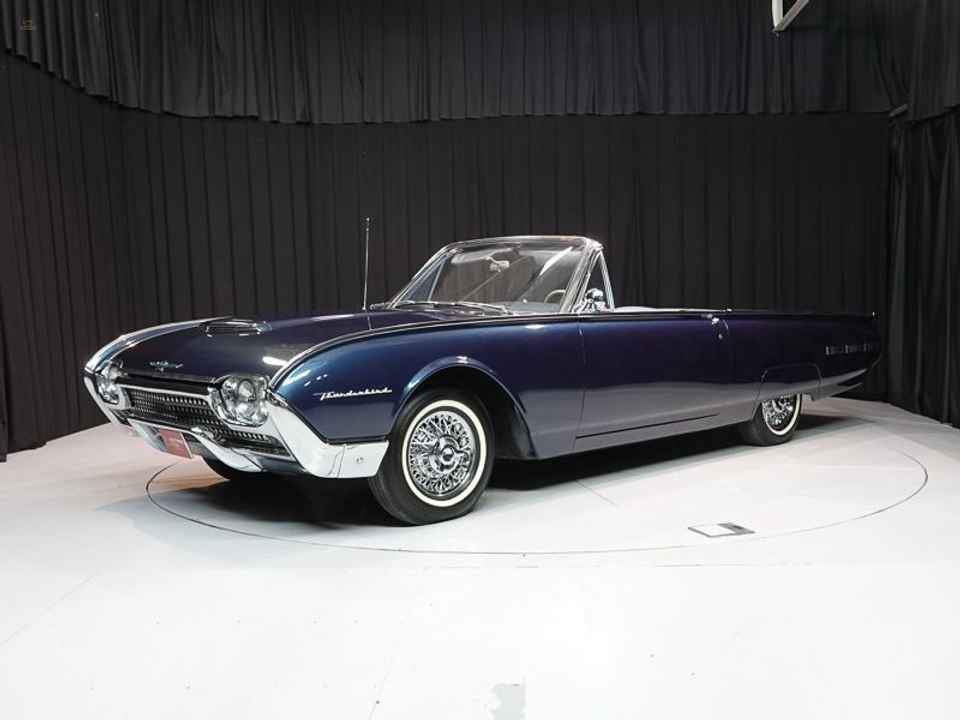
| Karosserieform | Sonstige |
| Kilometerstand | 13.542 km |
| Getriebe | Schaltgetriebe |
| Hubraum | 6384 cm³ |
| Erstzulassung | 1962 |
Walkaround-Video: Hier klicken
Im Jahr 1955 feierte der Ford Thunderbird, auch bekannt als T-Bird, seine Markteinführung. Dieses Fahrzeug, das als typischer amerikanischer Cruiser gilt, ließ sich von sportlichen europäischen Autos wie dem Mercedes 300 SL und dem Jaguar XK120 inspirieren. Ursprünglich sollte es den Chevrolet Corvette übertreffen, bevor diese den Spitzenplatz einnehmen konnte. Das Design des Thunderbirds wurde weithin für sein elegantes und fast filmisches Erscheinungsbild gelobt, verbunden mit einem kraftvollen und typisch amerikanischen V8-Motor, der mühelos beeindruckende 193 PS – und mehr – leistete, eine bemerkenswerte Leistung für seine Zeit. Der Thunderbird wurde über einen langen Produktionszeitraum von fünf Jahrzehnten in elf Generationen hergestellt, bis das letzte Modell 2005 vom Band lief.
Obwohl sich der Thunderbird an europäischen Sportwagen orientierte, stand er auch für eine bedeutende Portion amerikanischer Nostalgie. Eine Fahrt in diesem Fahrzeug vermittelt das Gefühl, in die sechziger Jahre Amerikas zurückversetzt zu werden, wo Drive-in-Kinos unter einem romantischen Sternenhimmel, sorgloses Cruisen auf weiten Straßen und ein Gefühl von Freiheit dominieren. Der Thunderbird verkörpert den sorglosen Geist jener Zeit, einer Ära in der amerikanischen Geschichte, die weithin romantisiert und gefeiert wird.
Ford Bullet Bird
Der Ford Bullet Bird – der seinem Namen im Hinblick auf das Erscheinungsbild gerecht wird – wurde in den Jahren 1961 bis 1963 gebaut. Dieses Modell ist das dritte in einer Reihevon elf Generationen der Thunderbirds brachte ein völlig neues Aussehen. Nach der etwas enttäuschenden zweiten Generation antizipierte Ford die Bedürfnisse ihrer Stammkunden, was zum Bullet Bird führte.
Der Bullet Bird war fast durchgehend anders als seine Vorgängergeneration. Die zweite Generation wurde von den meisten Amerikanern nicht geliebt, und die Eisenhower-Rezession führte zu einem Rückgang des Verbrauchervertrauens. Ford musste eingreifen, um einen Marktanteilsverlust an Chevrolet und dessen Corvette zu verhindern. Der Bullet Bird brachte Erleichterung, und die Wirtschaft stabilisierte sich. Dieser neue Thunderbird brachte drei leistungsstarke – obwohl alle drei sehr potente – 6390 ccm V8-Motoren, die 300 oder mehr Pferdestärken leisteten und von einem Cruise-O-Matic-Automatikgetriebe mit drei Gängen gesteuert wurden.
Das Design ist leicht an dem glänzenden Chromstahlstreifen erkennbar, der sich vom vorderen Bereich der Motorhaube bis zu den Rücklichtern schlängelt. Die Rücklichter und das Heck sehen aus wie ein Militär-Jetfighter. In der Seitenansicht hat die Karosserie die Form einer Kugel, was ihr den Namen gibt.
Ford war in mehreren Bereichen innovativ, und der Bullet Bird profitierte davon durch die Einführung eines sogenannten Swing-Away-Lenkrads. Ein Lenkrad, das nach rechts geschoben werden kann, wenn das Auto im Park ist, um dem Fahrer beim Aussteigen alle Platz und Komfort zu bieten.
Dieses Auto zu fahren ist süchtig machend, es weckt ein nostalgisches Elvis Presley-Gefühl, das kein anderes Auto hervorrufen kann. Außerdem ist es ein erschwinglicher Oldtimer, der seinen Wert erhält oder steigert, was ihn insgesamt zu einer guten Investition macht.
Technische Informationen:
Karosserie
Mechanik
33.750,00 €
35.999,00 €
31.500,00 €
37.500,00 €
27.000,00 €
25.990,00 €
25.900,00 €
24.999,00 €
24.900,00 €
 Neu
Neu
12.950,00 €
 Neu
Neu
32.500,00 €
 Neu
Neu
14.950,00 €
 Neu
Neu
69.950,00 €
 Neu
Neu
28.950,00 €
 Neu
Neu
45.000,00 €
 Neu
Neu
18.950,00 €
 Neu
Neu
27.950,00 €
 Neu
Neu
23.950,00 €
 Neu
Neu
285.000,00 €
 Neu
Neu
16.950,00 €
 Neu
Neu
175.000,00 €
 Neu
Neu
80.000,00 €
 Neu
Neu
23.500,00 €
 Neu
Neu
27.500,00 €
 Neu
Neu
199.950,00 €
 Neu
Neu
99.950,00 €
 Neu
Neu
33.950,00 €
 Neu
Neu
79.950,00 €
24.950,00 €
 Neu
Neu
9.950,00 €
 Neu
Neu
12.950,00 €
 Neu
Neu
7.500,00 €
8.750,00 €
11.950,00 €
18.250,00 €
49.950,00 €
6.250,00 €
67.950,00 €
11.500,00 €
6.950,00 €
35.000,00 €
7.950,00 €
27.950,00 €
60.000,00 €
8.500,00 €
12.950,00 €