-
Kategoriler
-
Markalar
Kategoriler
-
Kategoriler
Fiyat isteğe bağlı
 Fransa

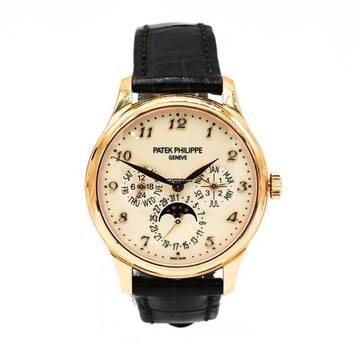
| Cinsiyet | Erkek/Unisex |
| Tür | Kol saati |
| Durum | Çok iyi |
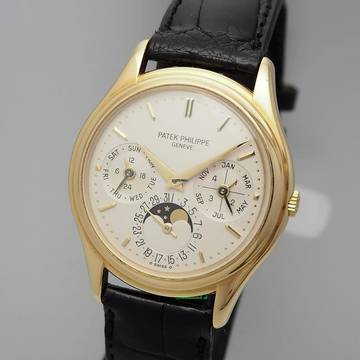
| Kasa malzemesi | Yellow Gold |
| Kayış malzemesi | Leather |
| Kayış rengi | Siyah |
| Kadran rengi | Gümüş |
| Mekanizma | Otomatik |
| Cam | Sapphire crystal |
| Çap | 36 mm |
| Toka | Tokalı |
| Malzeme Kapağı | Sarı altın |
| Kutu | Mevcut |
| Orijinallik sertifikası | Mevcut |
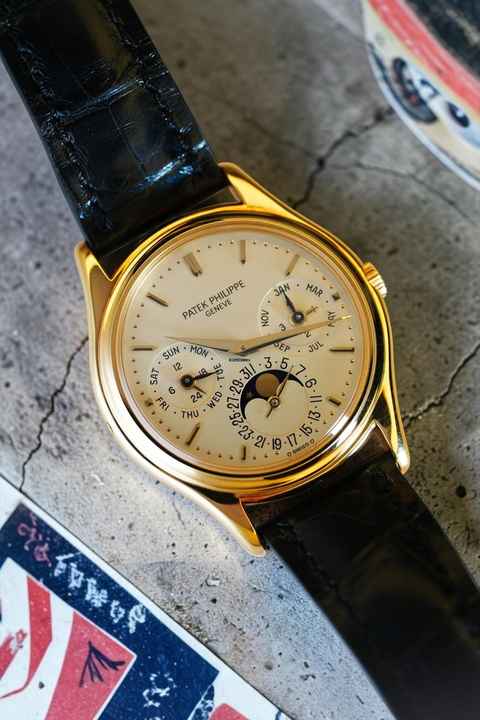
Nous sommes en 1988. L’horlogerie mécanique sort à peine de la crise du quartz. Beaucoup de maisons hésitent encore, mais Patek Philippe, elle, fait un choix radical : revenir à l’essence même de son identité — la complication.
Trois ans plus tôt, en 1985, la référence 3940 a été lancée comme une déclaration. Un quantième perpétuel automatique, d’une finesse remarquable, animé par le calibre 240Q à micro-rotor, permettant une boîte incroyablement mince d’environ 9 mm.
Mais en 1988, quelque chose change.
C’est l’apparition de la seconde série — et parmi elle, ces premières pièces dites early second series, produites sur une courte période, entre 1987 et 1989.
Ce qui distingue cette “early second series”, ce sont les détails — et chez Patek, les détails sont tout :
Les sous-compteurs deviennent plus structurés, plus présents
La signature s’agrandit légèrement, affirmant son identité
Le cadran abandonne certains accents typographiques du passé
Le tout crée une impression plus moderne… mais sans jamais rompre avec la tradition
Certaines pièces de 1988 sont même transitionnelles, mêlant codes de première et deuxième série — comme si la montre elle-même hésitait entre deux époques.
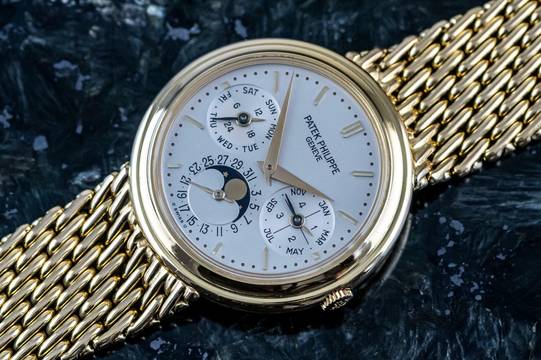
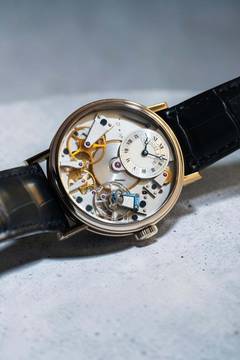
In the hushed silence of a Geneva workshop in the late 1980s, a watch was born that didn't seek to impress—it gently imposed a certain inevitability. The Patek Philippe Ref. 3940, in its 1988 early second series version in yellow gold, belongs to that rare category of objects that already seem classic at the moment of their creation.
The year is 1988. Mechanical watchmaking is just emerging from the quartz crisis. Many brands are still hesitating, but Patek Philippe makes a radical choice: to return to the very essence of its identity—the complication.
Three years earlier, in 1985, the reference 3940 was launched as a statement. A remarkably thin automatic perpetual calendar, powered by the micro-rotor caliber 240Q, allowing for an incredibly slim case of approximately 9 mm.
But in 1988, something changed.
This marks the arrival of the second series—and among them, these first pieces known as the early second series, produced over a short period, between 1987 and 1989. What distinguishes this “early second series” is the detail—and at Patek Philippe, details are everything:
The subdials become more structured, more prominent.
The signature is slightly enlarged, asserting its identity.
The dial abandons certain typographical features of the past.
The overall effect is a more modern impression… but without ever breaking with tradition.
Some pieces from 1988 are even transitional, blending codes from the first and second series—as if the watch itself were hesitating between two eras.
39.000,00 €
77.972,00 €
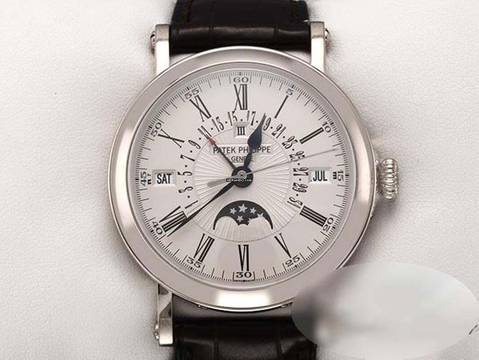
41.790,00 €
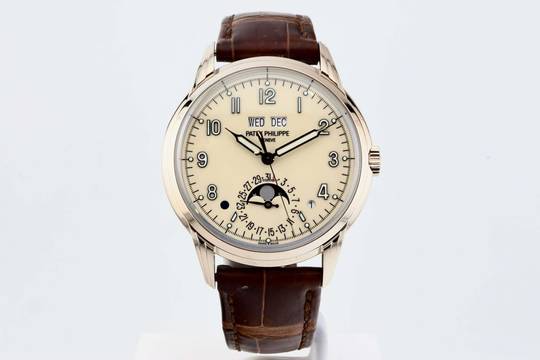
49.900,00 €
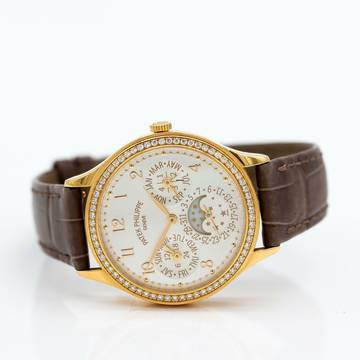
49.995,00 €
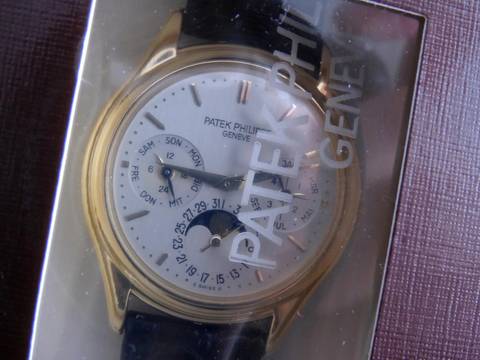
69.990,00 €
73.500,00 €
59.999,00 €
57.590,00 €
65.000,00 €
69.000,00 €
61.990,00 €
57.900,00 €
69.000,00 €
52.800,00 €
57.590,00 €
730.000,00 €
54.010,00 €
62.500,00 €
Fiyat isteğe bağlı
 Yeni
Yeni
59.990,00 €
 Yeni
Yeni
28.500,00 €
 Yeni
Yeni
Fiyat isteğe bağlı
 Yeni
Yeni
Fiyat isteğe bağlı
Fiyat isteğe bağlı
61.000,00 €
30.000,00 €
6.999,00 €
65.000,00 €
26.500,00 €
22.500,00 €
7.990,00 €
3.999,00 €
4.400,00 €
4.595,00 €
4.200,00 €
9.300,00 €
Fiyat isteğe bağlı
61.500,00 €
Fiyat isteğe bağlı